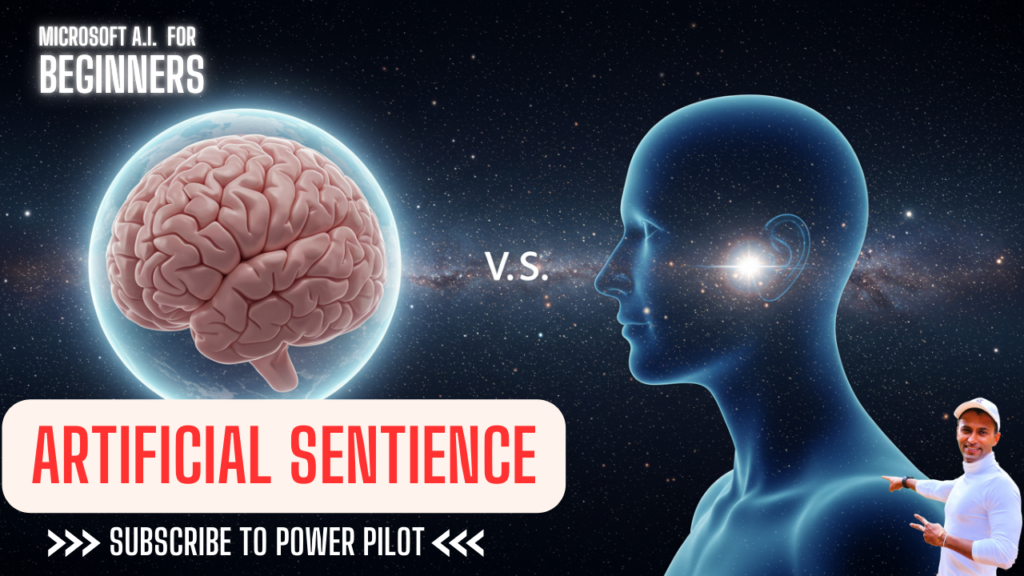
What Is Consciousness?
Consciousness is our personal, subjective awareness of our thoughts, memories, feelings, sensations, and surroundings. It forms the inner narrative that makes each of us uniquely who we are a continuously evolving sense of self that is both deeply personal and inherently mysterious.
Perspectives on Consciousness
Materialistic Perspective
Many scientific theories suggest that consciousness emerges from the complex interactions within our brains. For example, neuroscientists like Antonio Damasio propose that our rich tapestry of subjective experience is the result of intricate neural and physiological processes. In this materialist view, our conscious experience ceases when the brain stops functioning.
Spiritual/ Vedic Perspective
However, alternative perspectives challenge the notion that consciousness is strictly confined to the brain. The extended mind thesis, for instance, argues that aspects of our cognitive processes—and perhaps even consciousness itself—can extend beyond our skulls to include external objects and environments. Anecdotal reports, such as out-of-body and near-death experiences, add further intrigue to this debate, though robust empirical evidence remains limited.
The Debate on Artificial Sentience
A hot topic in emerging technologies is whether Artificial Superintelligence (ASI) will ever achieve true sentience. Some theorists believe that if AI systems become complex and expansive enough, they might naturally develop conscious experiences—a possibility supported by frameworks like Integrated Information Theory.
Yet, many experts argue that raw computational power and advanced intelligence do not automatically produce the subjective, felt experiences that characterize true consciousness, even if ASI surpasses human capabilities in many other ways.
Ultimately, consciousness remains one of the most captivating and challenging frontiers in both science and philosophy. Our understanding of it is continuously evolving.